Reading Glasses Myths: Common Misconceptions, Cleared Up
Small print gets harder to read, and suddenly everyone has an opinion. Wait before buying readers. Wear them too often, and your eyes will get weaker. Choose a stronger pair, and you will see better.
That is not how reading glasses work.
Readers help your eyes focus up close while you wear them. They do not weaken your vision or make presbyopia progress faster. In this blog, we will clear up the myths that cause the most confusion, so you can choose the right help and keep clear vision close.
9 Reading Glasses Myths and the Facts Behind Them
Reading glasses are simple. The advice around them often is not. Here is what is true, why it matters, and what to keep in mind when choosing your next pair.
Myth 1: Needing Reading Glasses Means Your Eyes Are Weak
Fact: Difficulty focusing up close is usually caused by presbyopia. This is a normal change that develops as the natural lens inside your eye becomes less flexible.
Your eyes are not failing. They simply cannot shift from distance to near focus as easily as they once did. Readers provide the close-up help that has become harder for your eyes to supply on their own.
Not every reading problem is presbyopia, though. When blur persists or does not improve comfortably with readers, an eye exam is the right next step.
Myth 2: Wearing Reading Glasses Makes Your Eyes Worse
Fact: Readers clear your near vision while you wear them. They do not damage your eyes or make presbyopia progress faster.
The confusion often begins after you get used to seeing small print clearly again. Take the glasses off, and the difference feels more noticeable than it did before. That can seem like your vision has declined, but the readers did not cause the change.
Readers do not make your eyes dependent. They simply make close work easier while you are wearing them.
Myth 3: Everyone Needs Reading Glasses at 40
Fact: Presbyopia is linked to age, but it does not arrive on the same birthday for everyone.
You may notice the symptoms earlier or later depending on your existing vision, how close you hold reading material, the lighting around you, and how much time you spend on near work.
Pay attention to what your eyes are doing rather than choosing readers because of your age. Trouble reading comfortably is more useful information than the number on your birthday cake.
Myth 4: Blurry Print Is the Only Sign You Need Readers

Fact: Small print may still look clear at first, while reading begins to require more effort.
You might notice that you:
-
Hold labels or menus farther away.
-
Reach for brighter light.
-
Develop tired eyes during close work.
-
Get headaches after reading.
-
Take longer to bring nearby text into focus.
Look for a pattern. One difficult label in poor light does not tell you much. Repeated trouble during ordinary close-up tasks is a better sign that your near vision may need help.
Myth 5: Clear Distance Vision Means You Do Not Need Readers
Fact: Distance vision and near focus are not the same thing.
You can read a road sign clearly and still struggle with the menu once you sit down. Even 20/20 distance vision does not rule out presbyopia because presbyopia affects near focusing rather than distance visual acuity.
Readers handle that close range without changing the way you see across the room.
Myth 6: Stronger Reading Glasses Give You Better Vision
Fact: The best reading strength is the lowest one that keeps the task clear and comfortable at your normal reading distance.
More power does not automatically mean more useful vision. A stronger pair is usually designed for a shorter working distance. That may help with very fine detail but feel wrong for a book or computer screen.
The wrong strength does not permanently harm your eyes, though it can cause temporary blur, strain, or discomfort. Start with the task and distance, not the highest number you can read through.
Myth 7: One Pair Works for Every Close-Up Task
Fact: Different tasks happen at different distances.
A phone may sit close to your face. A desktop screen is usually farther away. Detailed handwork can be closer still. The strength that feels right for one may feel too strong or too weak for another.
When a pair chosen for small print makes your monitor look soft, the glasses are not necessarily wrong. They may simply be made for a shorter working distance.
Choose readers around where you will use them rather than treating all close work as the same.
Myth 8: Over-the-Counter Readers Work for Everyone
Fact: Over-the-counter readers work well for many people with straightforward near blur, but they cannot correct every vision need.
Most ready-made readers use the same power in both lenses. They do not account for different prescriptions between the eyes, astigmatism, distance correction, or other individual requirements.
If one eye stays blurrier, the print doubles, or discomfort continues, have your vision assessed. For people whose eyes need similar close-up help, over-the-counter readers can still be a practical and effective choice.
Myth 9: Any Reading Trouble Means You Only Need Readers
Fact: Readers help with ordinary near-focus loss, but they are not a substitute for checking your eye health.
Dry eyes, astigmatism, eye strain, and other vision changes can also make reading difficult. Book an exam when symptoms are new, persistent, noticeably different between your eyes, or not corrected comfortably with readers.
Sudden vision loss, flashes of light, a sudden increase in floaters, or a curtain or shadow over your vision require immediate eye care. Those symptoms do not fit the usual pattern of presbyopia.


FAQs
Do reading glasses weaken your eyes over time?
No. They improve near clarity while worn but do not weaken your eyes or speed up presbyopia.
How do I know whether I need reading glasses?
Persistent near blur, holding text farther away, eye strain, and close-work headaches are common signs.
Can I wear reading glasses all day?
Standard readers are usually meant for near tasks and may blur distance vision.
Will the wrong reading-glasses strength damage my eyes?
It should not cause permanent damage, but it may produce blur, strain, or discomfort.
Should I get an eye exam before buying readers?
An exam is wise when symptoms are new, uneven, persistent, or not comfortably corrected.
Replace the Myths With Clearer Everyday Vision

Reading glasses bring nearby print into focus while you wear them. They will not weaken your eyes or change the way presbyopia develops.
What matters is choosing a strength that feels clear at your normal reading distance. When the blur is sudden, uneven, or still uncomfortable with readers, book an eye exam instead of moving straight to a stronger pair.
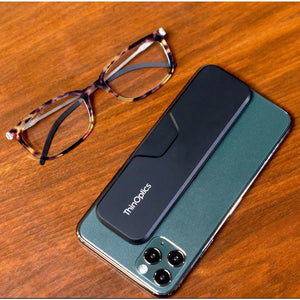
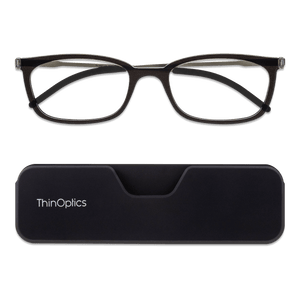
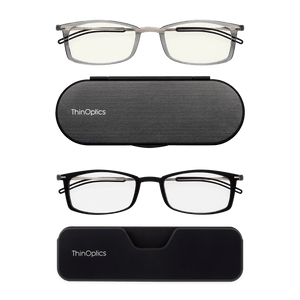
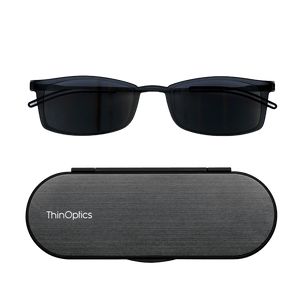
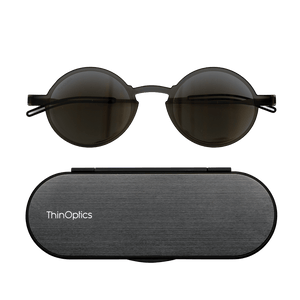
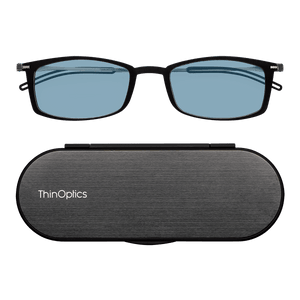
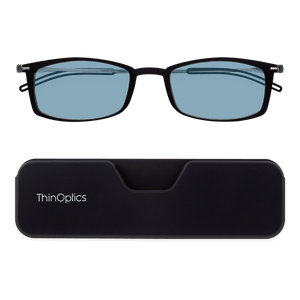
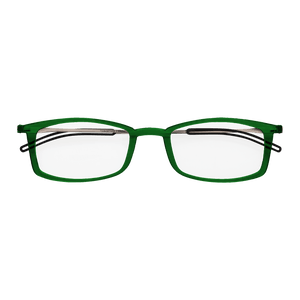
Once you know readers are right for you, ThinOptics makes it easier to keep them close rather than searching for them whenever small print appears.
Explore ThinOptics portable reading glasses and keep the clarity you need close at hand.