Sunglasses for Driving: What to Check Before Your Next Road Trip
The playlist is ready, the snacks are packed, and your sunglasses are somewhere in the car. Before you set off, give that pair a closer look.
Good sunglasses for driving should offer verified UV protection, comfortable vision, and a clear view of both the road and your dashboard. This blog will walk you through the lens, fit, and visibility checks worth making before your next road trip.
Start With UV Protection, Then Check Glare and Fit
Choosing driving sunglasses gets easier when you know what each feature does. Use this quick guide before comparing styles:
|
What to Check |
What You Want |
|---|---|
|
UV protection |
A clear UV400 or 100% UVA/UVB protection claim |
|
Glare control |
Polarization can help with reflected glare |
|
Lens tint |
Suitable for driving and the light conditions |
|
Dashboard visibility |
Displays remain easy to read |
|
Frame fit |
Comfortable, secure, and clear at the sides |
|
Vision correction |
Your driving prescription, if needed |
Tint, polarization, and UV protection do different jobs. A dark or polarized lens doesn’t automatically confirm UV protection. Check each feature separately.
1. Are Your Sunglasses UV Protected? Read the Label
Look for UV400, 100% UV protection, or 100% UVA and UVB protection on the product page, packaging, or lens label.
Lens darkness tells you how much visible light is reduced. It doesn’t tell you how well the lenses filter invisible ultraviolet rays. A lighter lens can provide strong UV protection, while a darker pair may leave that detail unclear.
If you already own sunglasses and can’t find their UV information, an eye care professional may be able to check them.
2. Consider Polarized Lenses, Then Test Your Car’s Displays
Sunlight bouncing off wet pavement can create glare even when the sky ahead looks comfortable. Polarized lenses filter certain reflected light, helping reduce that bright reflection.
They can be useful for daytime driving, with one detail worth checking before you leave.
Check the Dashboard While Parked
Polarized lenses can make some digital displays look dimmer. A head-up display, which projects information onto the windshield, may also become harder to see. The effect depends on the glasses and vehicle.
Sit in your normal driving position and check the speedometer, navigation screen, and head-up display while safely parked.
You should be able to read essential information without tilting your head to find it. If you can’t, try another lens option before the trip.
3. Choose a Driving-Suitable Tint, Rather Than the Darkest Lens
Gray and brown are common starting points for driving sunglasses. Gray offers a relatively neutral view, while brown can change how contrast appears. Confirm that the specific lenses are suitable for road use.
If a product lists a filter category, remember that the category describes visible-light transmission, not UV protection.
Category 4 lenses are too dark for driving. Categories 2 and 3 are commonly used for daytime sunglasses, but the lenses must also meet requirements for recognizing traffic signals. Check the manufacturer’s driving guidance rather than choosing by category alone.
Pack clear prescription glasses if you need them, too. Sunglasses belong to the bright part of the journey; switch to appropriate clear lenses as daylight fades.
4. Check Whether Light-Adjusting Lenses Darken Inside the Car

Photochromic lenses change tint in response to light. Many rely heavily on UV exposure to darken, and a windshield blocks much of that activating UV.
That means a pair that darkens outdoors may stay lighter inside your car. Some designs work behind windshields, so check the exact lens description rather than assuming all light-adjusting lenses behave alike.
Try your pair in the vehicle before a long drive. If they stay too light for comfortable daytime use, bring dedicated sunglasses that suit your vision needs.
5. Try Wraparound Sunglasses Without Giving Up Side Visibility
Wraparound sunglasses curve around the sides of your face, helping limit light entering around the lenses. Larger frames can also provide more coverage.
For driving, balance that coverage with an open view. Thick arms or poorly positioned frame edges can get in the way when you check mirrors or look over your shoulder.
Try the glasses while seated in your parked car. Turn toward both mirrors and make your usual shoulder checks. Notice whether the frames slide, pinch, or block part of the view.
A comfortable fit should let you focus on the journey without repeatedly adjusting your glasses.
6. Match the Lenses to Your Driving Vision
Sun protection and vision correction need to work together. If you use prescription glasses for driving, choose sunglasses that preserve that correction.
Reading sunglasses serve a different purpose: they help with close-up outdoor tasks, such as books and menus. Reading-only sunglasses aren’t a substitute for the distance correction you need behind the wheel.
Before leaving, clean your lenses and windshield, check for distracting scratches, and pack a protective case. Put on your chosen pair before moving, and pull over safely if you need to change glasses during the drive.
Those small preparations make your sunglasses easier to use throughout the trip.


FAQs
Are polarized sunglasses always better for driving?
They can reduce reflected glare, but check that your dashboard and head-up display remain readable.
Do darker sunglasses offer better UV protection?
No; UV protection depends on the lens’s verified filtering properties, not its darkness.
Can I wear sunglasses for night driving?
Use appropriate clear lenses at night; sunglasses reduce the light available to see the road.
Are wraparound frames essential for driving?
No; they offer useful coverage, but secure fit and unobstructed vision matter more than a particular shape. Choose around your eyes, your vehicle, and the conditions you’ll actually encounter.
Get Road-Trip Ready With ThinOptics
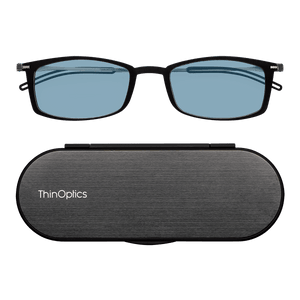
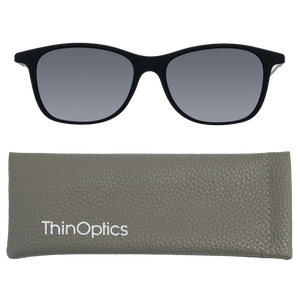
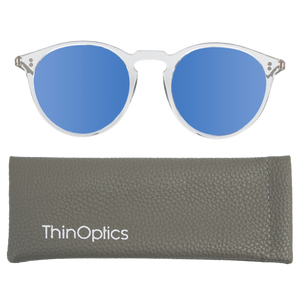
The right sunglasses for driving combine UV protection with a comfortable fit, suitable tint, and readable displays. ThinOptics offers options such as Menlo Park Sunglasses with polarized lenses and stated 100% UV protection. Check the individual lens details and your prescription needs before choosing.
Explore ThinOptics sunglasses to find a pair for the bright miles ahead.