Slim Glasses Cases: What to Look for When You Want Them Always With You
The best glasses case is the one you stop thinking about. It stays with the things you already carry, keeps your readers protected, and opens easily when you need them.
A case can look slim and still feel bulky once the glasses are inside. The real test is how the full setup fits into your day. This blog will cover what matters before you buy, from loaded thickness and frame fit to protection, access, and attachment.
What to Look for in a Slim Glasses Case
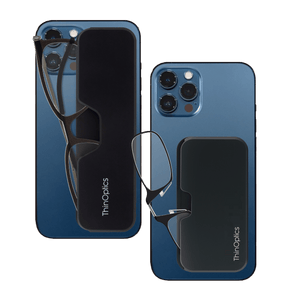
A case has to work with the glasses inside it. Test the full setup in the pocket, bag, or wallet where you expect to carry it, or on the phone where you plan to attach it.
Slim Profile After the Glasses Are Inside
The empty case measurement tells only part of the story. Once the glasses are inside, the depth and weight can change enough to create a noticeable bulge.
Place the loaded case where you plan to carry it. Sit down with it in your pocket. Hold your phone as usual. Slip it into the smallest compartment of your bag. A slim case should remain comfortable during normal use, not simply look thin in a product photo.
Internal Dimensions That Match Your Glasses
Compare the internal length, width, and depth with the glasses fully folded. Allow for the frame width, lens height, bridge shape, hinges, temple thickness, and frame curve.
The glasses should go in naturally. Any fit that requires twisting the frame, pressing down on the temples, or forcing the closure is too tight.
Ultra-slim cases are often built around a specific reader design. Confirm the listed compatibility rather than assuming that “universal” means every frame will fit.
Enough Protection for Where You Carry It
A case in an empty jacket pocket faces less pressure than one at the bottom of a crowded bag.
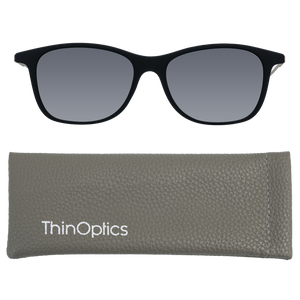
Soft cases mainly guard against surface scratches. Semi-rigid and hard cases offer more resistance when other items may press against the glasses. Whichever type you choose, it should cover the lenses, bridge, and hinges without adding more structure than your carry setup needs.
The smallest case will not always provide the most protection. The right balance depends on where it spends the day.
Closure That Holds Without Adding Pressure
The closure should stay secure as the case turns, moves, or gets pressed inside a bag. Turn it upside down with the glasses inside. Give the closed case a light squeeze and see whether it opens or lets the readers shift.
Magnets, snaps, zippers, sliding lids, and friction-fit openings can all work well when they suit the design. What matters is that the closure does not touch the lenses, bend the temples, or place pressure across the frame.
Loose lids and weak magnets are easy to overlook until the case opens where you carry it.
Smooth Interior With No Lens Contact Points
Outside protection means little when the glasses rub against rough surfaces inside the case.
Feel along the lining and around the closure. There should be no exposed hardware, raised seams, or sharp edges near the lenses. The readers need enough support to limit movement, but not so much that they become difficult to remove.
Pay attention to what happens when the case moves. Internal rubbing can leave marks even when nothing outside reaches the glasses.
Secure Way to Keep the Case With You

A case is easier to keep close when it stays with something you rarely leave behind.
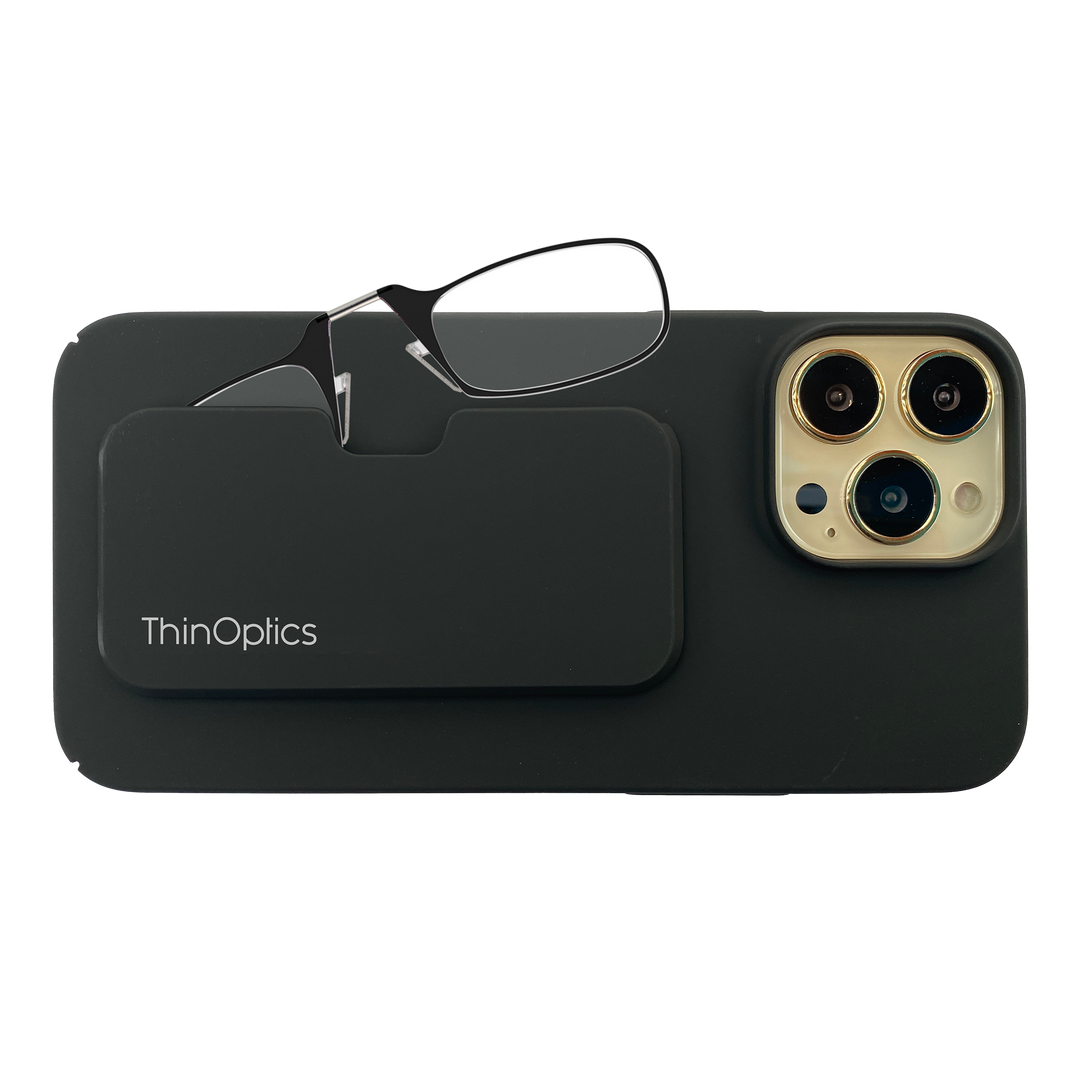
That could mean attaching it to your phone, keys, wallet, or everyday bag. Inspect the part doing the work, whether it is an adhesive surface, magnet, keyring, clip, hinge, or mounting point. Make sure it holds while you walk, sit, reach into a bag, or use the item it is attached to.
Compatibility matters here too. Confirm that the attachment works with your particular phone case, wallet, keyring, or bag. No attachment makes a case impossible to lose, but the right one removes an extra thing to remember.


Quick Access Without Fumbling
Picture the moment you actually need them. You may be standing at a counter or holding a menu in one hand.
The case should open without a struggle, and the readers should come out without dragging across the lining or forcing you to pinch the lenses. Putting them away should feel just as simple.
Cases that catch on cards, clothing, keys, or bag linings add friction every time you use the case. A portable design should make access quicker, not turn it into a careful two-handed job.
Minimal Interference With Everyday Essentials
A slim case still has to leave the rest of your daily setup usable.
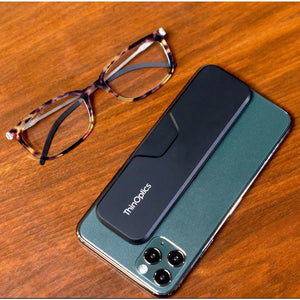
On a phone, it should preserve your grip and stay clear of the camera. Confirm how it affects your usual charging method. In a wallet, it should leave room for the cards you actually carry. On a keychain, it should not swing heavily or dig into your pocket.
A pocket case should remain comfortable while you sit and walk. A bag case should stay easy to find and remain closed when other items press against it.
Durable Materials and Strong High-Wear Points
The finish may catch your eye, but the closure, hinge, opening, attachment, and outer edges decide how the case holds up.
Handle those areas before buying when possible. Open and close the case more than once. Notice whether the material stretches, the attachment flexes, or the closure begins to feel loose.
A case designed to travel every day needs strength where hands, pockets, and bags repeatedly put it under stress. Treat claims about water resistance, drop protection, or crush testing as product-specific details that should be verified rather than assumed.
Red Flags That a Slim Case May Become Inconvenient
Some cases earn the word “slim” only when they are empty. Others save space but create new problems every time you use them.
Be cautious when:
- The case is thin but takes up more length or width than expected.
- The glasses fit only after you push, twist, or carefully arrange them.
- The closure presses against the frame or opens during normal movement.
- An attached case swings, shifts, slips, or comes loose.
- A phone-mounted design blocks the camera, affects your grip, or gets in the way of charging.
- You need both hands to open the case or remove the readers.
- The case does not offer enough structure for the pocket or bag where you carry it.
- Clips, raised edges, or other details catch on clothing and bag linings.
Any one of these issues can turn a portable case into something you start leaving behind.
When the Case and Readers Are Designed Together

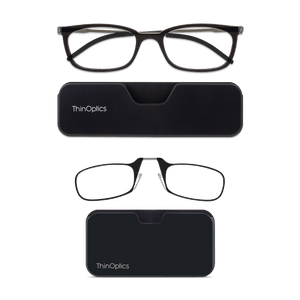
Standard frames can only fold so flat. Putting them into a smaller case does not remove that limit. It often creates a tighter fit or shifts the bulk somewhere else.
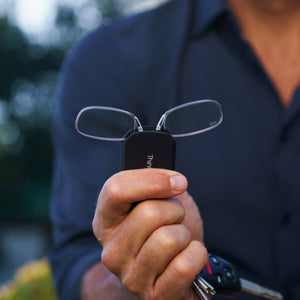
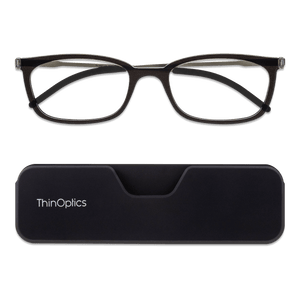
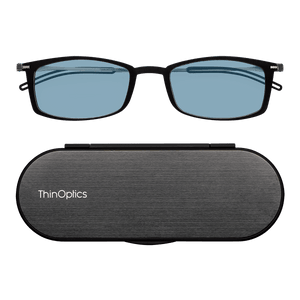
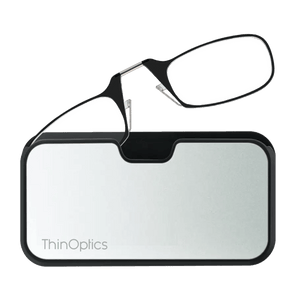
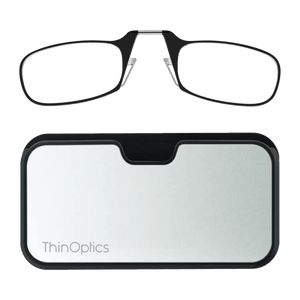
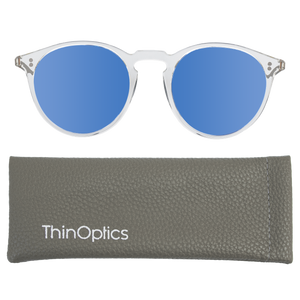
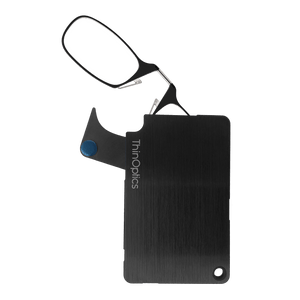
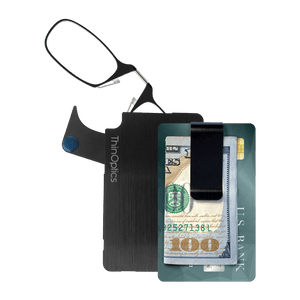
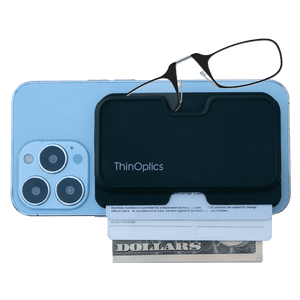
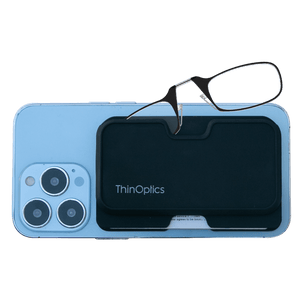
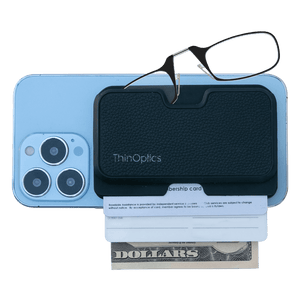
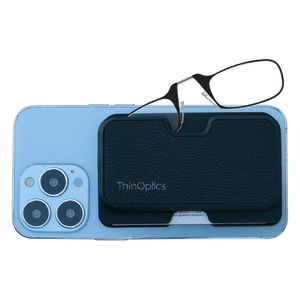
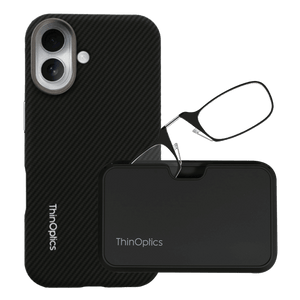
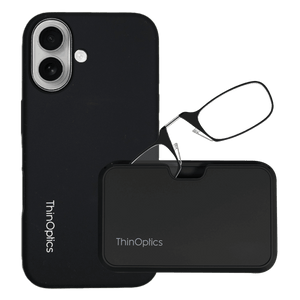
For a truly compact setup, it can make more sense to start with readers designed around slim storage. ThinOptics pairs portable eyewear with phone, keychain, wallet, and slim-case carry options, so the glasses and case work as one everyday system.
Check the measurements and compatibility for the exact reader and case you are considering. For attached styles, confirm that the setup also works with your phone, phone case, keys, or wallet. The complete combination matters more than the size of either piece on its own.
FAQs
Are all slim glasses cases made for standard frames?
No. Some slim cases fit only smaller, flatter, folding, or specially designed reading glasses.
Is a hard or soft slim case better?
It depends on whether the case needs mainly scratch protection or greater resistance to pressure.
How can I tell whether a case is truly slim?
Check its dimensions after your glasses are placed inside, and test how comfortable it is to carry.
Can a tight case damage glasses?
A case that compresses the frame may place unwanted pressure on the temples, hinges, bridge, or lenses.
What is the most important feature in an everyday glasses case?
It must combine comfortable carry, secure storage, proper fit, and quick access.
Keep Clarity Close With the Right Case
A useful slim case stays compact after the readers go in. It protects the parts that matter, holds shut, and opens without making you stop and wrestle with it.
The right choice should also fit naturally with the things you already carry. That is what keeps your readers nearby when a menu gets harder to read, or small print appears without warning. ThinOptics readers and cases are built around that idea.
Choose a ThinOptics carry style that fits your routine, check the product dimensions, and keep clarity close without adding another bulky case to your day.