How to Measure Glasses Size at Home and Find the Right Fit
A good pair of readers should disappear into your day. You should notice the fine print, not frames sliding down your nose or pressing at your temples. When that happens, the strength may be right, but the size may be wrong.
The easiest way to measure glasses size at home is to compare a few millimeter measurements with a pair that already fits. This blog will show you where to measure, what each number means, and how to use those numbers to choose readers that feel secure, comfortable, and easy to keep close.
Understand What You Need to Measure
Before you reach for a ruler, separate frame size from the other numbers connected to reading glasses.
- Frame size tells you how the glasses will sit on your face.
- Reading strength is the plus number, such as +1.50, that controls magnification.
- Pupillary distance measures the space between your pupils and helps position prescription lenses correctly.
These measurements are not interchangeable. A pair can be the right strength and still slide, pinch, or feel unbalanced. Measuring the frame helps you choose a better physical fit. It will not tell you which reading strength you need.
Gather Your Measuring Tools
Use a rigid ruler marked in millimeters. You will also need somewhere to record the numbers. A pair of glasses that already fits comfortably gives you the best starting point.
Set the glasses on a flat surface with both arms open. Hold the ruler straight across each section instead of following the curve of the frame, and measure every part twice before writing it down. A few millimeters can make a noticeable difference when you compare frames online.
Step 1: Read the Numbers Printed on Your Glasses
Look inside one of the arms or near the bridge before measuring by hand. Many glasses already have three sizing numbers printed on them.
For example, 48-19-140 usually means:
- 48 mm lens width
- 19 mm bridge width
- 140 mm temple length
Write these numbers down. They give you a useful reference for comparing frames, especially when your current pair fits well.
The printed sequence usually leaves out the total width across the front of the glasses. You will measure that next because it helps show whether a new frame is likely to feel too narrow, too wide, or close to the fit you already know.
Step 2: Measure a Pair That Fits Well
A comfortable pair is your best sizing guide because you already know how it feels after more than a few minutes of wear.
Place it on a flat surface with both arms open, then record each measurement in millimeters. Start with total frame width, followed by lens width, bridge width, and temple length. Add lens height only when you want to compare the shape or coverage of two frames.
Measure the Total Frame Width
Hold the ruler straight across the widest part of the frame front. Measure from the outermost edge on one side to the outermost edge on the other, including hinges or details that extend beyond the lenses.
This is the most useful number for judging whether another pair is likely to feel too tight or too loose.
Measure One Lens
Measure across the widest part of one lens opening. Do not include the frame around it.
Lens width helps you compare the overall proportions of two pairs. It works best alongside the total frame width rather than as a fit measurement on its own.
Measure the Bridge
Measure the shortest gap between the inner edges of the lenses.
The bridge helps determine where the glasses rest and how securely they stay in place. Keep in mind that shape matters too. Two frames with the same bridge width may not sit the same way on your nose.
Measure the Temple Arms
Measure from the hinge to the point where the arm begins to bend. Then measure from the bend to the tip and add the two numbers.
A well-fitting temple should reach behind your ear without pulling the frame backward or pressing against the side of your head.
Measure Lens Height When Useful
Measure from the top to the bottom of the lens opening at its tallest point.
Lens height is useful when you are comparing how much coverage a frame provides or how it will look on your face. For most ready-to-wear readers, treat it as a helpful extra rather than a deciding measurement.
Step 3: Estimate Your Size Without an Existing Pair

You can still get a useful starting point when you do not have another pair to measure.
Stand in front of a mirror and measure straight across your face from temple to temple. Keep the ruler above your cheekbones and level with the floor. Take the measurement twice, then look for frames with a similar total width.
This gives you an estimate. It cannot account for the bridge shape, the curve of the frame, or how the arms will feel. A credit card can help you guess whether your face is closer to small, medium, or large, but it is too rough for choosing an exact size. Check the return or exchange policy before ordering.
Step 4: Check the Fit in the Mirror
Measurements help you narrow the choice. The final check is how the readers sit once they are on.
A comfortable pair should meet these criteria:
- The bridge feels secure without pinching.
- The frame stays in place when you look down.
- The sides do not press against your head.
- The arms sit comfortably over your ears.
- The lenses stay clear of your cheeks.
- Your eyes sit reasonably close to the center of the lenses.
Glasses that keep sliding may be too wide, or the bridge may not suit your nose. If the arms bow outward or press at the temples, the frame is probably too narrow.
Step 5: Save a Practical Shopping Range
Keep your measurements on your phone so they are easy to use the next time you shop.
A note might read 134 mm frame width, 50 mm lens width, 18 mm bridge, and 140 mm temple length.
Treat these numbers as a range rather than a rule. Total frame width and bridge fit deserve the most attention. The rest can vary slightly from one design to another.
When you are deciding between two sizes, compare both with the pair that fits you best. Go slightly wider when the smaller frame presses at the temples. Go narrower when the larger one slips out of place. Actual millimeter measurements will tell you more than a small, medium, or large label.
Keep Frame Size Separate From Reading Strength
Fit and magnification solve two different problems. Frame measurements tell you how the readers will sit. The plus number tells you how much they magnify.
A pair can feel comfortable and still be too weak or too strong. Check the strength at the distance where you normally read. Our reading-strength guide can help you find a sensible starting point.
Home checks are useful for everyday readers, but they are not a replacement for an eye exam. Speak with an eye care professional if you notice sudden changes, double vision, ongoing blur, headaches, or a clear difference between your eyes.
Measure Foldable and Armless Readers Correctly
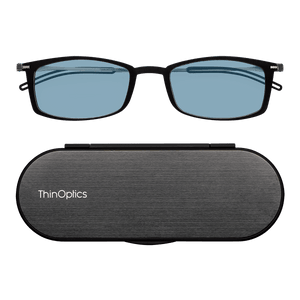
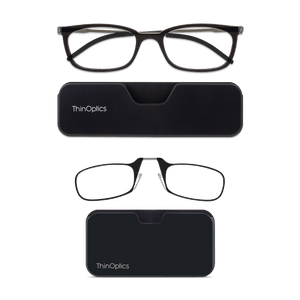
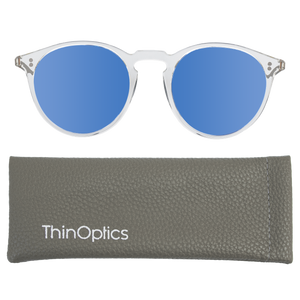
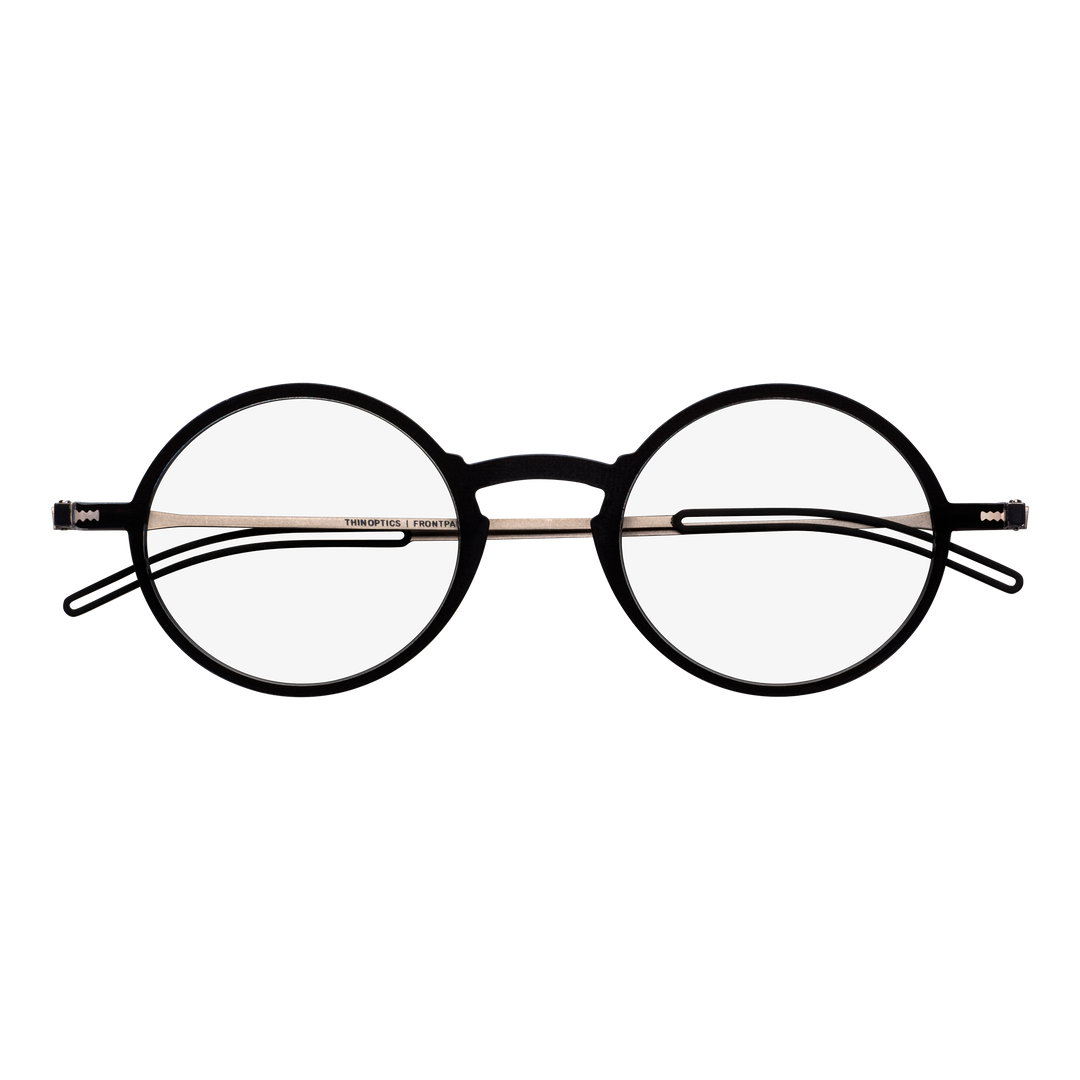
Foldable full-frame readers use the same measurements as standard glasses. You still compare the total frame width, lens width, bridge, and temple length. The folding design changes how the glasses are stored, not how they are sized.
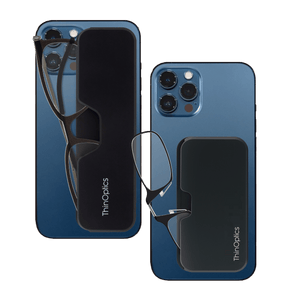
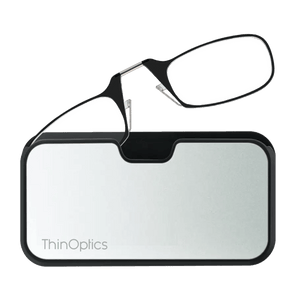
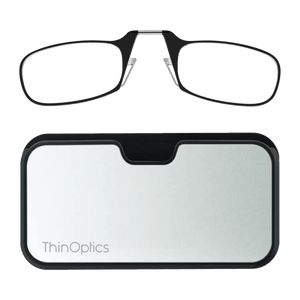
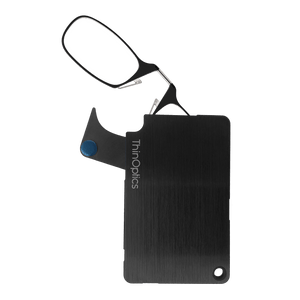
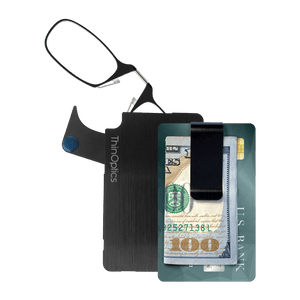
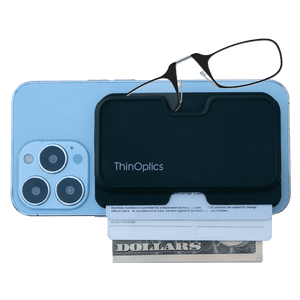
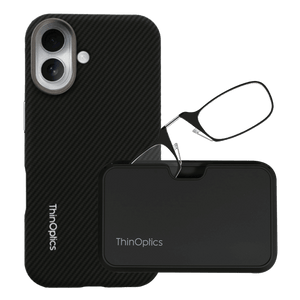
Armless readers work differently because there are no temple arms to measure. Focus on the total width, the fit at the bridge, and whether the readers stay in place without pinching. The lenses should also sit at a comfortable height for reading.
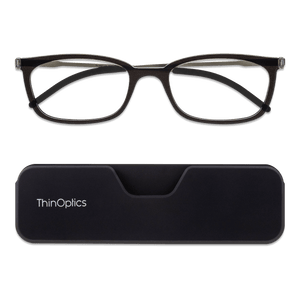
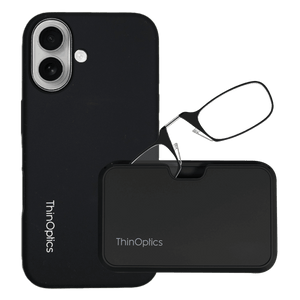
ThinOptics lists the dimensions for its full-frame and armless styles separately, so you can compare each design using its own measurements instead of assuming every compact pair will fit the same way.


FAQs
What do the three numbers on glasses mean?
They normally show lens width, bridge width, and temple length in millimeters.
Which glasses measurement matters most?
Total frame width and bridge fit are useful starting points, but the complete design determines comfort.
Can I measure glasses size without owning a pair?
Yes, but measuring your face gives you an estimate rather than an exact frame size.
What should I do if I am between two glasses sizes?
Compare both frames with a comfortable pair and use pressure at the temples or slipping to guide the choice.
Is glasses size the same as reading strength?
No. Frame size controls physical fit, while reading strength controls magnification.
Do foldable reading glasses require different measurements?
Full-frame foldable readers use standard measurements, while armless readers have no temple-length measurement.
Measure Once and Keep the Right Readers Close

Once you know your numbers, choosing another pair becomes much simpler. Check the sizing printed on your current frames, measure anything that is missing, and save the results where you can find them the next time you shop.
Those numbers will narrow the search, though the shape of the bridge and frame can still affect the final fit. A return or exchange option gives you room to confirm the choice at home. ThinOptics provides measurements for each style, including foldable full-frame readers and armless designs.
Compare your measurements with ThinOptics styles and find reading glasses that fit your face and daily routine.