The Science Behind Blue Light Glasses: Do They Actually Protect Your Eyes?
You spend hours in front of screens, and by day’s end, your eyes can feel sore and fatigued. You’ve probably heard about blue light glasses and, like many people, you’re unsure whether they truly help or are just a fad.
In this blog, we’ll clarify what blue light is, summarize the evidence, and highlight where anti-reflective (AR) lenses can help with comfort. We’ll also help you choose ultra-portable blue light glasses, designed to be with you when you need them.
What Blue Light Is and Where It Comes From
Blue light is a short-wavelength, high-energy part of visible light. It is present everywhere. The sun is the main source and plays a role in natural wake and sleep cycles. Today, we also encounter blue light from digital screens (computers, phones, and tablets), along with LED and fluorescent lighting.
The key takeaway is that blue light from artificial sources is far weaker than sunlight. The American Academy of Ophthalmology notes that there is not enough evidence showing blue light from screens causes retinal damage. Eye strain after long screen use is usually linked to screen habits, such as reduced blinking or improper viewing distance, rather than blue light itself.
What Evidence Says About Eye Strain and Sleep
Research on blue-light filtering lenses shows promising results for both screen comfort and sleep quality. A controlled study found that participants who wore lenses designed to reduce short-wavelength light in the evening experienced better sleep quality and reported smoother transitions into rest compared with those using clear lenses. Other clinical work supports these findings, particularly among people who struggle with irregular sleep patterns or nighttime screen use.
There is also evidence that filtering blue light can ease visual fatigue during demanding digital tasks. In one computer-based trial, users wearing stronger blue-light reduction lenses reported lower discomfort levels than those wearing standard clear lenses.
Healthy habits still matter, yet blue-light filtering lenses can serve as a helpful addition for people who want more comfortable screen time and steadier evenings.
How Lenses Can Help With Glare and Comfort

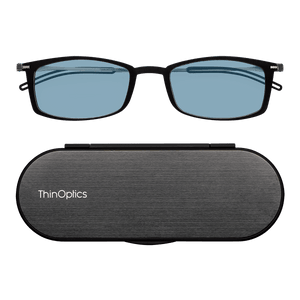
Blue light glasses can support visual comfort in environments where screens and indoor lighting compete for attention. ThinOptics readers focus on filtering short-wavelength light, which some users find helpful during long periods of close-up digital work. Prescription wearers using Gino blue-light lenses also benefit from an anti-reflective coating that reduces reflections from overhead lighting and bright screens.
Less glare allows the eyes to maintain focus with fewer interruptions from distracting light sources. This can make transitions between different lighting conditions feel smoother and can lessen the effort required during tasks that demand sustained attention. These lenses work best as part of a broader approach that includes regular breaks, proper lighting, and thoughtful screen habits to keep overall comfort steady.
Pick a Pair You’ll Actually Wear Every Day
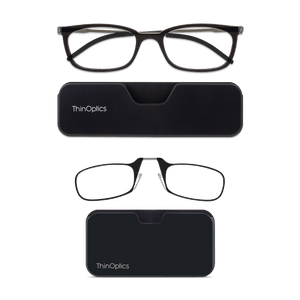
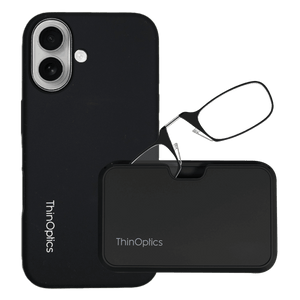
The best pair of glasses is the pair you actually have with you when you need them. This idea guides our design at ThinOptics. A bulky case left in a drawer cannot help when you suddenly need to read or join a video call. Our Blue Light Blockers are built for modern, on the go lifestyles and help keep your visual comfort always with you.
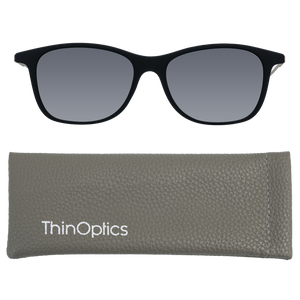
We have two unique and lightweight frame shapes available to suit your style:
- Brooklyn Blue Light Blocker Glasses (modern rectangular shape)
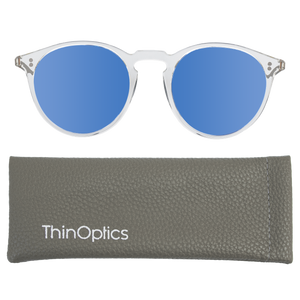
- Manhattan Blue Light Blocker Glasses (classic round shape)
And to keep them effortlessly close, you can choose how you prefer to carry your glasses:
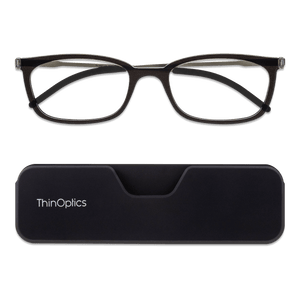
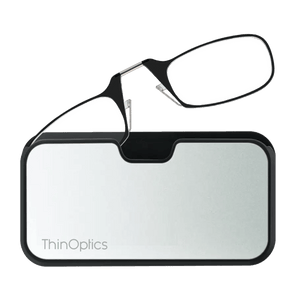
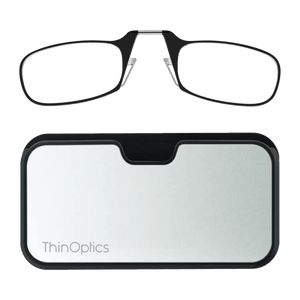
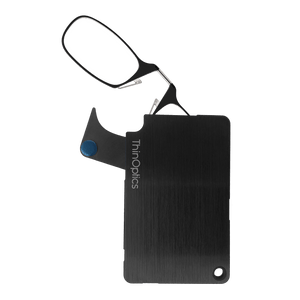
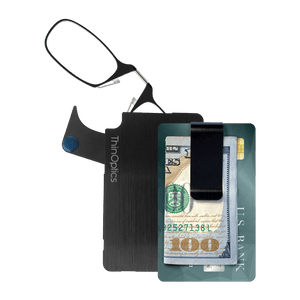
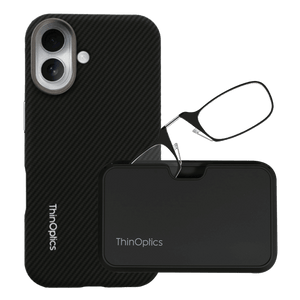
- The Ultra Slim Milano Case: About 4 millimeters thin, and designed to fit in small pockets or bags.
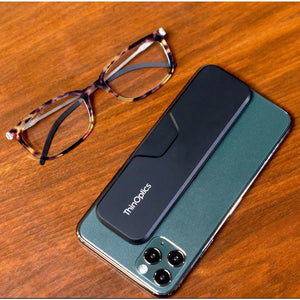
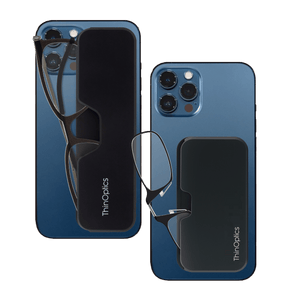
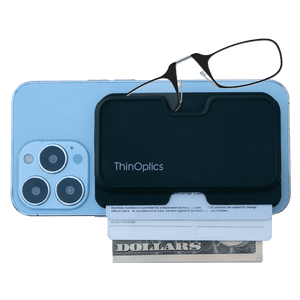
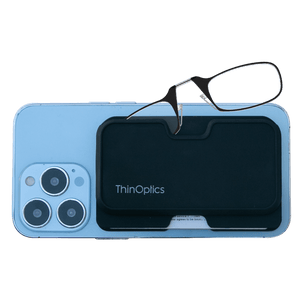
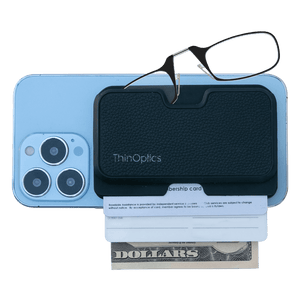
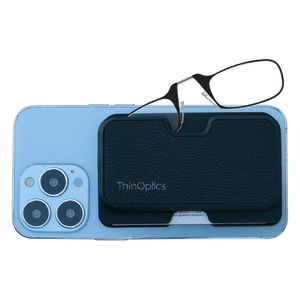
- The MagSafe Connect Case: Attaches to MagSafe-compatible iPhones and cases, so your glasses stay right on your device.
Choosing your pair is simple. Pick your frame shape, choose your reading strength, and select a carry style that fits your daily routine.
Quick At-Home Checks Before You Buy
Before choosing your Blue Light Blockers, it helps to confirm whether you need magnification for reading. You can complete a simple at-home check to find a comfortable strength or use our online vision strength test for guidance.
If you need magnification, grab a book or hold your phone at your usual reading distance. Start at +1.00 and read a short paragraph. If the text does not feel perfectly clear, try +1.50 and then +2.00 until the words feel sharp and comfortable. Once you find your strength, spend a little more time reading to confirm it feels natural. Use this same strength for your Brooklyn or Manhattan Blue Light Blockers.
If you do not need magnification, choose the 0.0 (plano) option for glare reduction and added comfort during screen time. Both frame styles are available in this non-prescription strength.
Most importantly, choose a carry method you will use every day so your glasses are always with you.
Screen Habits That Reduce Discomfort
Eyeglasses are one part of the solution. The other is building smart screen habits. To help reduce digital eye strain, try adding the following practices to your routine.
- Follow the 20-20-20 rule. Every 20 minutes, look at something at least 20 feet away for 20 seconds to give your focusing muscles a break.
- Remember to blink. Make an effort to blink fully and often to keep your eyes comfortable and avoid dryness.
- Adjust your screen setup. Match screen brightness to the surrounding light. Position screens to limit reflections from windows and overhead lighting. The top of your monitor should be at or slightly below eye level.
If discomfort, dryness, or headaches continue, schedule a professional eye exam. An optometrist can check for other concerns, including dry eye or vision changes that may need correction.
Keep Clarity Close With Portable Options

Blue light glasses can play a helpful role in easing visual fatigue and supporting more settled evenings, especially for people who spend long hours on digital devices. Pairing these lenses with steady screen habits creates a simple approach to daily comfort.
At ThinOptics, it is simple to get support right when you need it. Our Blue Light Blockers can stay with you on your phone in the MagSafe Connect Case, or in your pocket in the slim Milano Case. Choose 0.0 for non-magnification, or select your reading strength if you prefer magnification.
Ultimately, the most effective approach is a mix of smart screen habits and having the right tools within reach. Explore ThinOptics Blue Light Blockers and keep clarity close.