Reading Glasses vs. Contact Lens: When to Use One and Not the Other
Your distance contacts can still be doing their job when small print starts asking for more help. For some people, the answer is simply wearing readers over their contacts when they need to see up close. In other cases, multifocal contacts or prescription glasses make more sense.
The right choice starts with knowing what your contacts already correct. From there, you can decide when to add readers, when to switch, and when to take your contacts out altogether.
First, Know What Your Contacts Already Correct
Before adding reading glasses, check what your contacts are designed to do.
Distance-only contacts sharpen far vision. They may not correct presbyopia, the age-related change that makes close focus harder. In that setup, a pair of readers can sometimes provide the near help that is missing.
Multifocal and monovision contacts already handle more than one viewing distance. Multifocals combine different powers within each lens. Monovision usually sets one eye for distance and the other for near or intermediate vision. Adding readers over either setup can alter the intended visual balance.
Start with your contact prescription. Once you know what it already corrects, it becomes much easier to choose the right next step.
When to Wear Reading Glasses Over Contact Lenses
The following situations mainly apply when your contacts keep distance clear but leave nearby print out of focus.
You Only Need Near Help for a Moment
Readers over distance contacts can be useful when close-up tasks appear briefly during the day. Put them on to read small print, then remove them when you return to distance vision.
Standard single-vision readers may blur anything beyond their intended range, so they work best as temporary help rather than an all-day layer over your contacts.
This setup can be practical when your distance contacts already feel comfortable and near blur only interrupts you now and then.
You Are Working on Fine Detail
Close work often happens at one fixed distance. Sewing may sit closer than a book, while a repair may bring the object even nearer.
That working distance helps determine the strength you need. More magnification is not automatically better. The correction should make the task clear where your hands naturally hold it.
Prescription readers may be the better choice when accuracy matters, your eyes need different powers, or ready-made readers never feel evenly clear.
You Spend Time at a Computer
A monitor usually sits farther away than a phone or printed page. Readers chosen for close print can therefore feel too strong at a desk.
When the power does not match the screen distance, the display may look soft, or you may find yourself leaning forward. Choose correction for the distance where the monitor actually sits.
The pair that works for checking your phone may not be the pair you want for several hours at a computer.


Your Distance Contacts Already Work Well
When your distance contacts feel comfortable and give you reliable clarity, there may be no reason to replace that setup just because near vision has changed.
Adding readers can preserve the contact fit you already like while giving you close-up help when it is needed. It is a simple way to solve one new problem without changing everything else.
Before making it your regular approach, ask an eye care professional whether standard readers are suitable for your prescription and contact lens setup.
When Presbyopia-Correcting Contacts May Make More Sense
Readers work well when near tasks come and go. When you find yourself reaching for them throughout the day, it may be worth discussing multifocal or monovision contacts with your eye care professional.
Switching Constantly Between Near and Far
Some routines rarely stay at one viewing distance. You may look across a room, turn to a screen, then read paperwork a few minutes later.
Multifocal contacts are designed to support more than one range without asking you to put readers on each time the distance changes. That can make the day feel simpler when near and far tasks are constantly mixed together.
Results vary from person to person. Clear vision at one distance can involve a tradeoff at another, so the lenses need to be professionally fitted and tested.
Needing Hands-Free Near Vision
There are times when stopping to handle a pair of readers is simply inconvenient. Cooking, presenting, or working with both hands can make an extra frame feel like one more interruption.
Presbyopia-correcting contacts may keep near help in place while your hands stay on the task. That convenience does not make contacts the better choice for every activity, though. Comfort, clarity, and safety still depend on your eyes and the work in front of you.
Preferring Monovision After a Successful Trial
Monovision gives each eye a different job. One is corrected mainly for distance, while the other supports near or intermediate vision.
Some people adjust comfortably and like the freedom from switching glasses. Others notice that balance, depth, or sharpness feels different, especially during the first few days.
The best way to determine whether monovision works for you is through a professional trial. Monovision must be fitted and evaluated for you rather than copied from someone else’s prescription.
When to Remove Contacts and Use Glasses Instead

Reading glasses can add near correction over comfortable distance contacts. They should never be used to cover up pain, redness, or blurry vision that develops while you are wearing contacts.
Your Contacts Feel Painful, Red, Dry, or Unusually Blurry
When your eyes feel wrong, take the contacts out. Reaching for stronger readers will not solve irritation, an unsuitable fit, or unsafe wear.
Use suitable backup prescription glasses when you still need distance or near correction. Contact an eye care professional promptly if you experience redness, pain, discharge, light sensitivity, or unusual blur.
You Are Sleeping, Showering, or Swimming
Remove your contacts before showering or swimming. Do not sleep in them unless your eye care professional has prescribed them for overnight wear.
This is about protecting your eyes, not choosing the most convenient correction. Reading glasses will not replace contacts when you also need help seeing at a distance. Keep backup prescription glasses available for the ranges you need once the contacts come out.
When Ready-Made Readers May Not Be Enough
Ready-made readers usually place the same strength in both lenses. That can work well when both eyes need similar help, and the problem is limited to close print.
Prescription readers offer more control. They can account for different powers in each eye, astigmatism, lens positioning, and the exact distance where you work.
Here’s a simple way to decide:
- Similar power in both eyes and occasional near blur may suit ready-made readers.
- Different powers or astigmatism usually call for prescription lenses.
- Persistent blur, headaches, double vision, or trouble across several distances call for an eye exam.
Readers can solve a straightforward near-vision need. They do not replace a contact lens fitting or a complete eye exam.
FAQs
Can you wear reading glasses over contact lenses?
Often, yes, when distance contacts leave near vision uncorrected and an eye professional confirms the setup.
Can readers be worn over multifocal contacts?
Sometimes, but any added power should be professionally checked to avoid unsuitable correction.
Are prescription readers better than store-bought readers?
They are more suitable when each eye or working distance needs customized correction.
Should I remove contacts when my eyes hurt?
Yes. Remove them and contact an eye care professional promptly if you experience pain, redness, light sensitivity, or blur.
Can reading glasses replace my contact lenses?
Not when contacts also correct distance vision or other refractive errors.
Choose the Correction That Fits the Task

Most contact lens wearers have three practical choices. Add readers over comfortable distance contacts, try contacts designed for presbyopia, or remove the contacts and wear prescription glasses.
The right option depends on what your contacts already correct and the distance you need to see. It also depends on how often you move between near and far during the day.
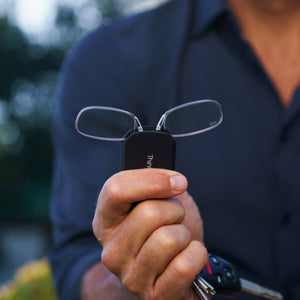
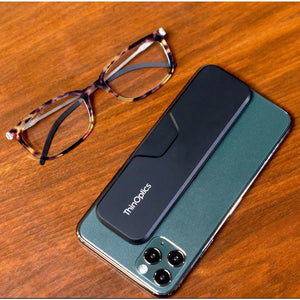
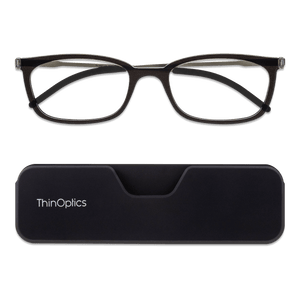
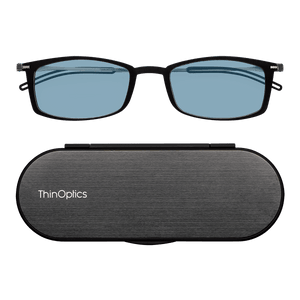
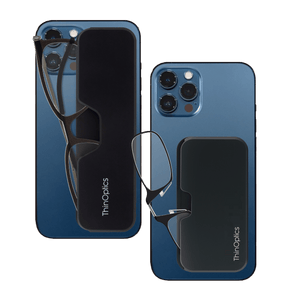
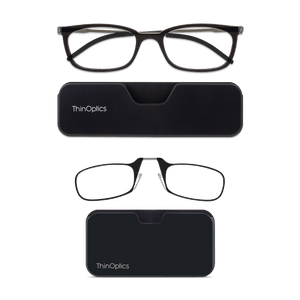
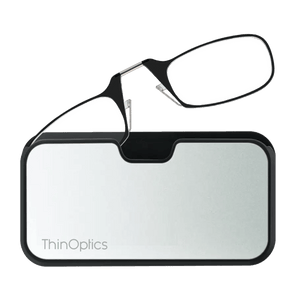
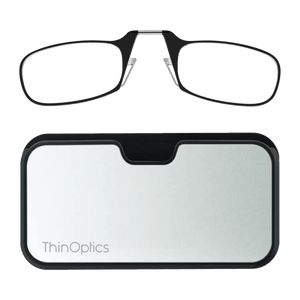
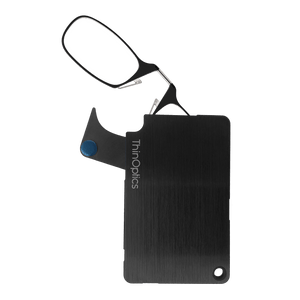
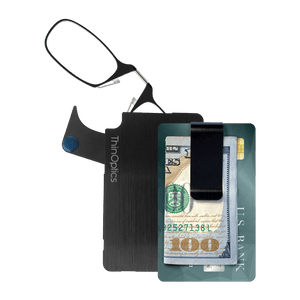
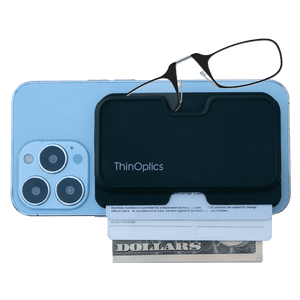
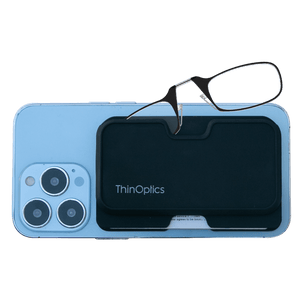
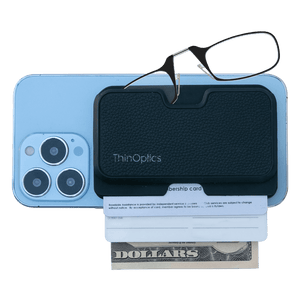
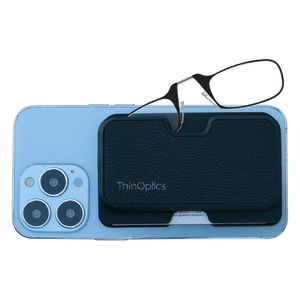
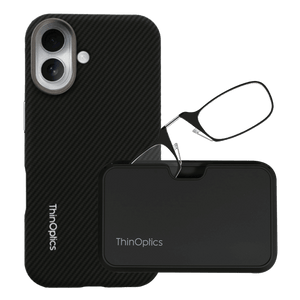
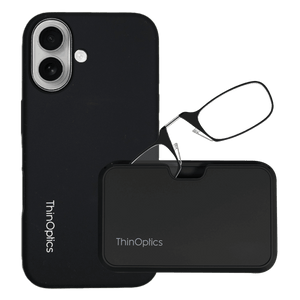
When an eye care professional confirms that readers are suitable, keeping a pair close makes the setup much easier to live with. ThinOptics readers can stay with your phone, keys, or pocket, ready for the moments when your contacts handle the distance but the small print still needs help.
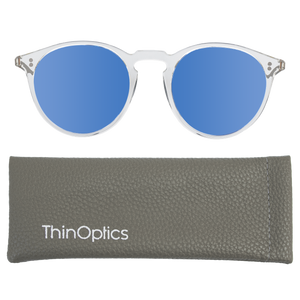
Explore ThinOptics reading eyewear designed to keep clear vision within reach.