Reading Glasses After 40: What Changes in Your Vision and What You Can Do About It
Most people do not mark the day their near vision starts changing. They simply notice that a menu looks clearer a little farther away, or that small print takes longer to settle.
After 40, that shift is usually presbyopia. The eye’s natural lens becomes less flexible, so close-up focus needs more help than it once did.
In this blog, we will explain what is changing and when reading glasses may help. We will also show you how to choose a practical setup that keeps clear vision close.
What Changes in Your Vision After 40
After 40, the eye’s natural lens gradually becomes less flexible. Distance vision may remain clear, but focusing on small print up close takes more effort. This common change is called presbyopia and is a normal part of aging.
You may first notice it when:
- Small print starts to blur.
- You hold your phone farther away.
- Your eyes take longer to refocus.
- Reading feels harder in low light.
- Close work leaves your eyes tired or brings on headaches.
Because distance vision may stay clear, the change can feel sudden even though it develops slowly. Reading glasses provide the extra close-up focus your eyes now need.
Presbyopia continues to change over time, so the strength that works today may need adjusting later.
What You Can Do About Your Changing Vision
Near-vision changes become easier to manage once you know what kind of help you need. Start by confirming the cause. Then choose readers for the distance and moments where small print gives you trouble.
Schedule an Eye Exam
When close-up vision first changes, an eye exam is a sensible place to start. Presbyopia is common after 40, but it is not the only reason reading may become difficult.
An eye care professional can check for astigmatism, different correction needs in each eye, or changes that also affect distance vision. Seek prompt care for sudden vision loss, flashes of light, new floaters, severe eye pain, or double vision. These are not typical signs of presbyopia.
Try Reading Glasses for Close-Up Tasks
Single-vision readers add the focusing power your eyes now need at close range. They can make a book easier to read and bring a phone screen back into focus at a comfortable distance.
Readers do not weaken your eyes or make presbyopia progress faster. Start with the lowest strength that makes print clear at your normal reading distance.
A properly scaled printed or online strength test can help you find a starting point, though it cannot replace an exam. The ThinOptics Online Vision Strength Test offers a quick way to narrow down a likely strength before choosing your first pair.
Choose Between Store-Bought and Prescription Readers
Ready-made readers may work well when both eyes need similar help, and your distance vision is otherwise clear. Prescription lenses are usually the better choice when each eye needs a different power, or your correction includes astigmatism.
The main options work like this:
- Readers use one strength for close work.
- Bifocals combine distance and near correction with a visible line.
- Progressives move gradually between distance and near vision.
- Computer glasses are designed for the intermediate distance between you and a screen.
- Multifocal contacts provide more than one viewing range without frames.
When your needs are limited to simple close-up blur, over-the-counter reading glasses may be all you need.
Match Your Readers to the Task

Reading distances change throughout the day. A computer screen sits farther away than a book, while a price tag may only need a quick glance. That is why one pair may feel comfortable for one task and less useful for another.
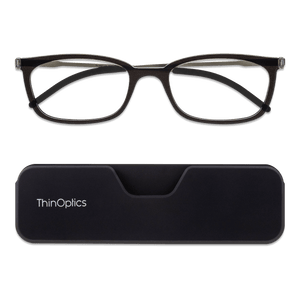
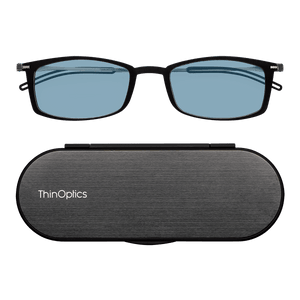
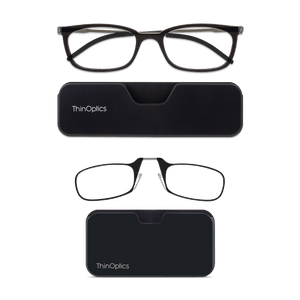
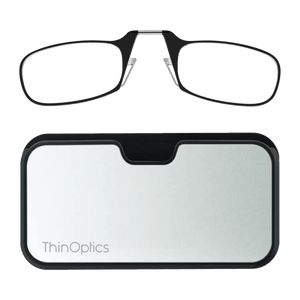
Full-frame readers are a practical choice for longer reading sessions or desk work. Compact and armless styles are useful when you only need help for a moment.
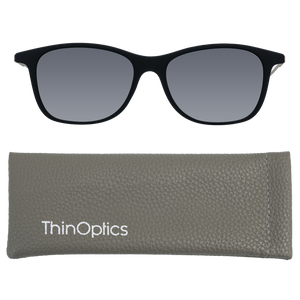
Standard readers can blur distance and should be removed before you walk or drive. ThinOptics offers portable and full-frame styles, making it easier to choose a pair around how you read and how long you wear them.
Improve Your Reading Setup
Readers work better when the page or screen is easy to see. A few small adjustments can make close work more comfortable:
- Use enough light to illuminate the page without creating glare.
- Increase the text size instead of bringing the screen closer.
- Keep reading material at a relaxed distance.
- Look away during longer stretches of close work.
These changes can reduce effort and discomfort. They will not reverse presbyopia or replace the correction your eyes need.
Keep Reading Glasses Within Reach
Presbyopia rarely affects every part of your day. You may need readers for a medication label, then put them away until another bit of small print appears.
That is where ordinary readers often become inconvenient. The pair works, but it is left in a drawer or another room.
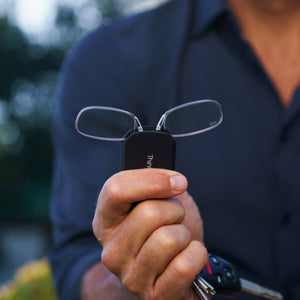
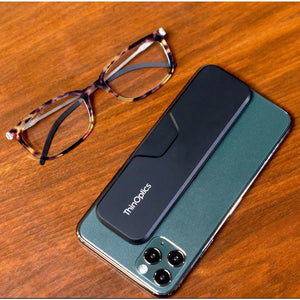
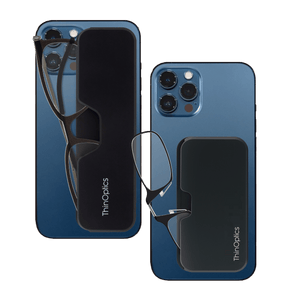
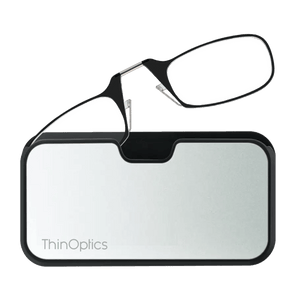
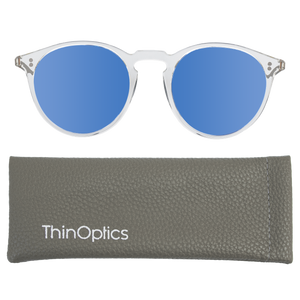
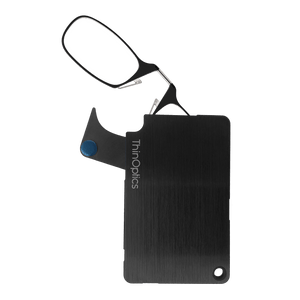
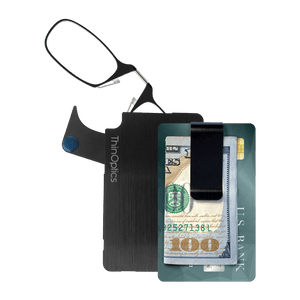
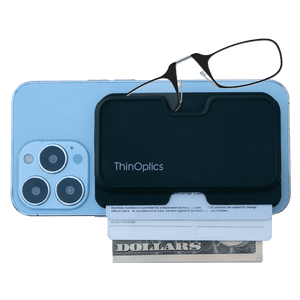
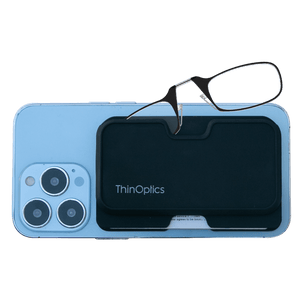
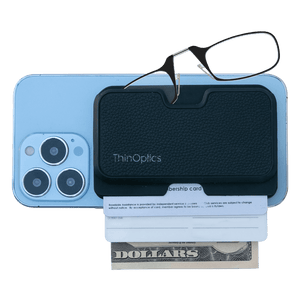
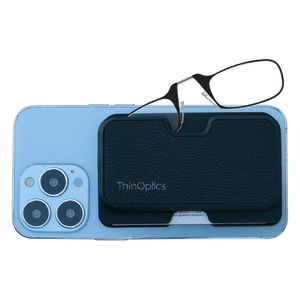
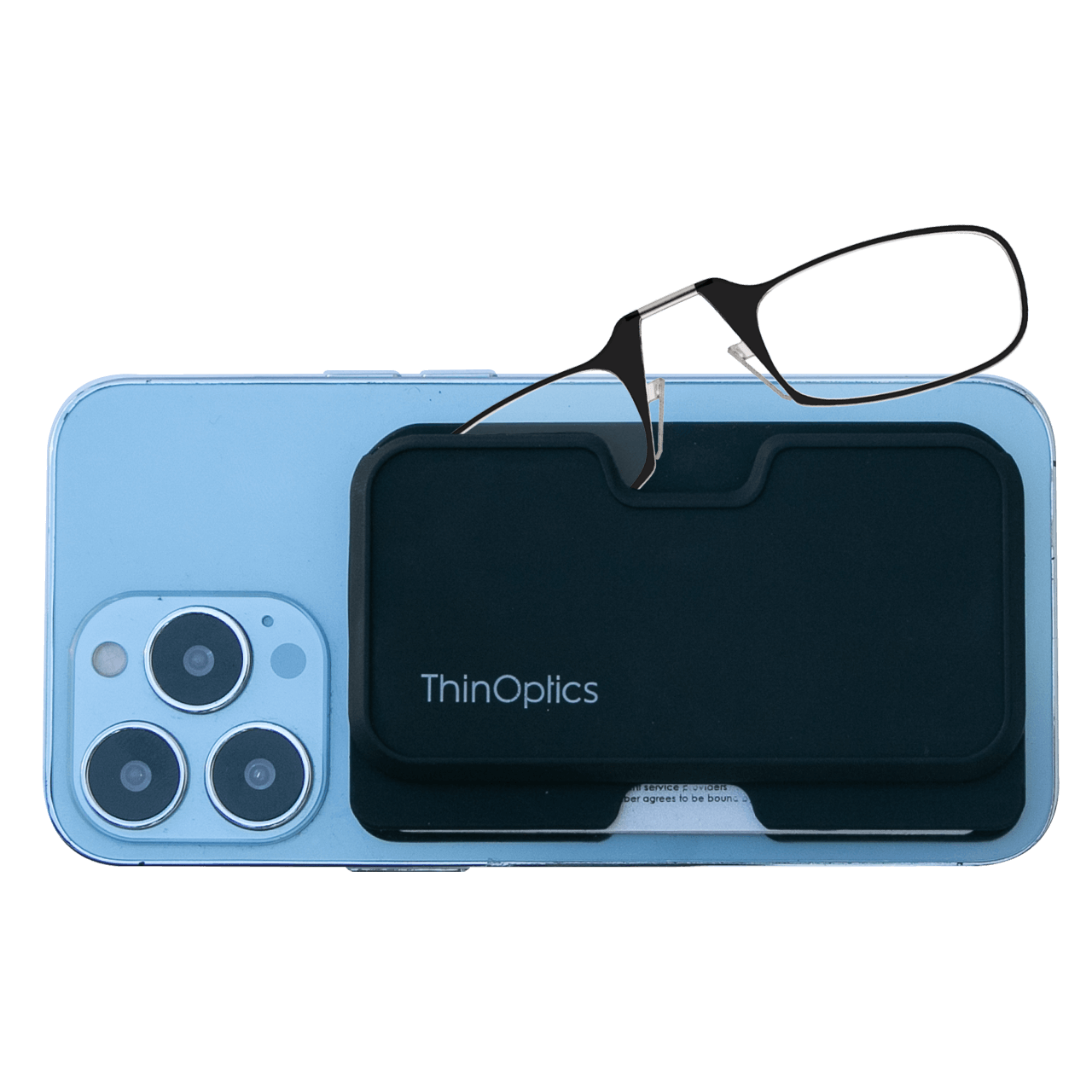
Keep your glasses with something that already travels with you. ThinOptics offers slim cases designed to attach to a phone or travel on a keychain, along with wallet-friendly options. Instead of trying to remember another loose pair, you can keep reading help close to the things you already carry.

Recheck Your Vision When Clarity Changes
Presbyopia develops gradually, so the strength that works now may not stay right forever.
Recheck your near vision when print no longer looks clear through your current readers. Recurring headaches, a noticeable difference between your eyes, or a change in distance vision also deserve attention.
Do not assume that moving to a stronger pair will solve the problem. A new strength check can show whether your reading needs have changed. An eye exam can determine whether something else is affecting your vision. The goal is not more magnification. It is the right amount for the way you read today.
FAQs
Does everyone need reading glasses after 40?
Most people eventually develop presbyopia, but when it begins and whether reading glasses are needed vary from person to person.
Can reading glasses make your eyesight worse?
No. Readers clarify near vision but do not weaken the eyes or speed up presbyopia.
Can I wear reading glasses all day?
Standard readers are mainly for close work unless an eye professional recommends another lens type for full-time wear.
Is presbyopia the same as farsightedness?
No. Presbyopia comes from age-related focusing changes, while farsightedness is a separate refractive error that can be present at any age.
How do I know which reading strength I need?
Use a properly scaled strength test for guidance, or have an eye professional measure your near-vision needs.
Keep Clear Vision Close After 40

Presbyopia is part of getting older, but struggling with small print does not have to become part of your day. Start with an eye exam or a strength check so you know what kind of help your near vision needs.
Once you have the right strength, the next step is keeping it close. ThinOptics readers are made to stay with the things you already carry, so clear print is easier to reach when you need it.
Explore ThinOptics reading glasses designed to stay Always With You.