Bifocal Glasses vs Reading Glasses: Which Option Actually Makes Sense for You?
You’re reading a menu, looking across the table, then checking a message. Should one pair of glasses handle all three, or would readers do the job?
Reading glasses support close-up tasks. Bifocal glasses typically combine distance and reading correction in one pair. The right choice depends on your prescription and how you spend your day. This blog will explain the differences, where progressive glasses fit, and what to consider before choosing.
Bifocals vs Readers: The Differences at a Glance
Start with the distances you need to see clearly. That makes the lens choices easier to understand.
|
Feature |
Reading Glasses |
Bifocal Glasses |
Progressive Glasses |
|---|---|---|---|
|
Main purpose |
Close-up tasks |
Typically distance and near vision |
Distance, intermediate, and near vision |
|
Lens layout |
One reading correction throughout each lens |
Two distinct sections |
Gradually changing power |
|
Visible dividing line |
No |
Usually yes |
No |
|
Everyday use |
Put on for reading; remove or switch for distance |
Look through the appropriate section |
Look through the appropriate zone |
|
Desktop screen use |
May need a screen-specific prescription |
Standard designs may leave a gap at screen distance |
Include an intermediate zone; suitability depends on fit and task |
These differences come from the lens design, rather than the frame style. Your prescription determines the correction within that design.
Choose Reading Glasses When Close-Up Tasks Are Your Main Need

Readers can be a straightforward choice for books, recipes, labels, and phone messages. You put them on when you need near help, then take them off or switch glasses to look farther away.
There are two main ways to get that reading correction.
Ready-Made Readers Offer Standard Strengths
Ready-made readers come in set powers, such as +1.50 or +2.00, with the same strength in both lenses. They may suit someone whose eyes have similar needs and who doesn’t require additional correction.
The number alone doesn’t tell the whole story. Your usual reading distance matters, too.
Prescription Reading Glasses Match Your Individual Eyes
Prescription reading glasses can account for different powers in each eye and astigmatism, a focusing difference that can make vision blurry or distorted.
Prescription readers can still be single vision. Having a prescription doesn’t mean you need bifocals. It means the lenses are made around your particular correction.
Choose Bifocal Glasses When You Regularly Switch Between Near and Far
Imagine watching television while checking a crossword. If you need correction for both distances, bifocals can keep those two jobs in one pair.
A typical bifocal lens has distance correction in the upper section and reading correction in a smaller lower section. You look through the part that matches what you’re viewing.
The convenience comes from having both corrections available without swapping pairs each time. The trade-off is learning where to look through the lens.
A proper fit helps position the reading section for your eyes. If you find yourself lifting your glasses or holding your head awkwardly, ask your eye care professional to check the fit and prescription.
Consider Progressive Glasses for Near, Screen, and Distance Vision
Your day may involve more than two distances. A book is close, a desktop monitor sits farther away, and a person across the room is farther still.
Progressive glasses change power gradually, with distance vision toward the top, intermediate vision through the middle, and reading vision toward the bottom. They have no visible dividing line.
They’re sometimes called “no-line bifocals,” but progressives and bifocals are different designs. Progressives include a range of powers rather than two distinct sections.
Learning to use the different zones can take practice. Their usefulness also depends on accurate measurements and a frame that sits correctly. Our single vision versus progressive lenses guide explores that comparison.
Give Computer Distance Its Own Check

A pair that works beautifully for a paperback may feel less comfortable at your desk. Your monitor usually sits farther away than your reading material.
Standard bifocals may not provide the correction you need at that middle distance. Progressives include an intermediate zone, but someone spending hours at a monitor may prefer dedicated computer lenses.
Measure from your eyes to your screen while sitting comfortably. Bring that measurement to your appointment, along with details about whether you use one monitor, several screens, or printed notes.
That gives your eye care professional something more useful than “I spend a lot of time online.”
Match Your Choice to a Typical Day
Before ordering, picture when you reach for glasses most often.
|
Your Routine |
An Option to Discuss |
|---|---|
|
You see well at distance and mainly need help reading. |
Ready-made or prescription readers |
|
You need near and distance correction and frequently switch between them. |
Bifocals |
|
You move between books, screens, and distant objects. |
Progressives |
|
You spend long stretches at one monitor distance. |
Computer-specific lenses |
|
You enjoy extended reading sessions but use multifocals elsewhere. |
A separate reading pair alongside your everyday glasses |
You can use more than one approach. A dedicated pair for a favorite activity may complement the glasses you wear for the rest of your day.


FAQs
Are bifocals better than reading glasses?
They serve different needs: bifocals typically combine near and distance correction, while readers focus on close-up tasks.
Do prescription reading glasses have a bifocal line?
Single-vision prescription readers have no bifocal dividing line.
Can I use reading glasses for driving?
Reading-only lenses are designed for near tasks; use the distance correction recommended for driving.
Do I have to choose progressives once I need reading help?
No; readers, bifocals, or progressives may suit you depending on your prescription, tasks, and preferences. Your eye exam and everyday routine help turn those options into a practical choice.
Find Your Everyday Fit With ThinOptics
The most useful glasses match both your eyes and the moments you need them. Start with your prescription, think about your reading and screen distances, and choose a lens design around those needs.
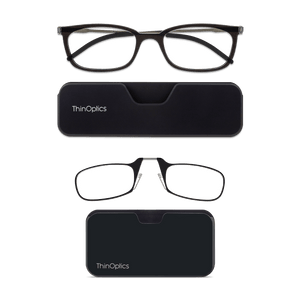
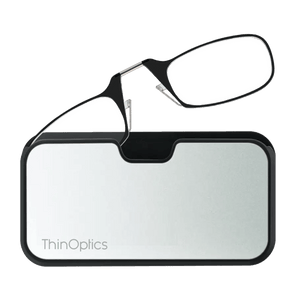
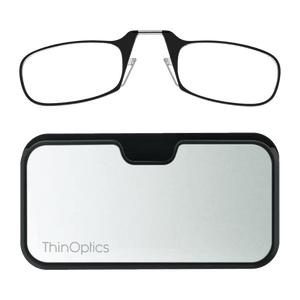
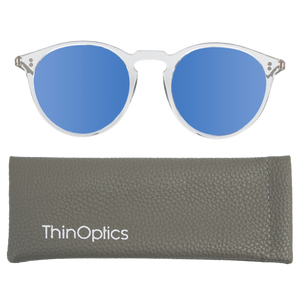
ThinOptics offers prescription options including single vision, progressive, and bifocal lenses on selected frames. Explore ThinOptics prescription glasses to find an option for your everyday routine.