Prescription Reading Glasses vs. Off-the-Shelf Readers: What Nobody Tells You
You put on readers, the text gets bigger, but your eyes still feel like they are working too hard. That does not always mean you need stronger lenses. It may mean your eyes need something more precise.
Off-the-shelf readers can help with quick, simple close-up tasks. Prescription reading glasses are made around your actual vision needs, including differences between eyes, astigmatism, pupillary distance, and how far you sit from what you read.
This blog will show when simple readers are enough, when a prescription matters, and how affordable prescription glasses can help you avoid buying the wrong pair twice.
Difference Between Prescription Reading Glasses and Off-the-Shelf Readers
Off-the-shelf readers magnify small text. Prescription reading glasses correct for your specific eyes. That is the real difference.
Off-the-shelf readers come in fixed strengths and usually use the same power in both lenses. They can work well for quick reading. Prescription lenses can account for different needs in each eye, astigmatism, pupillary distance, and your usual reading or screen distance.
When Off-the-Shelf Readers are Actually Enough
Off-the-shelf readers are not the wrong choice for everyone. They can be the smartest option when your needs are simple: quick close-up help, similar strength in both eyes, and no major astigmatism or distance-correction issues.
They are especially useful when you need clarity for small daily moments, not full-time correction. Prescription reading glasses make more sense when your eyes need a more customized lens.
Quick Reads
Menus, receipts, labels, recipes, and phone checks usually do not need a complicated setup. For these short tasks, the best readers are often the ones you can actually find when you need them.
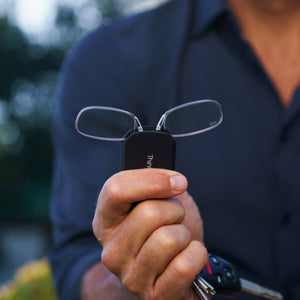
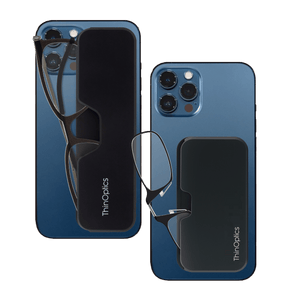
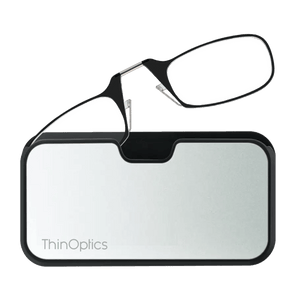
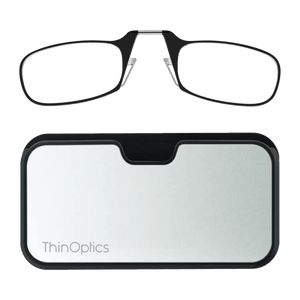
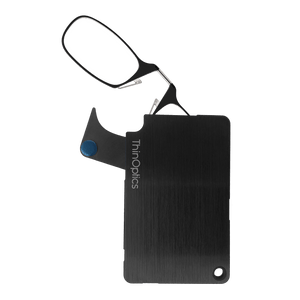
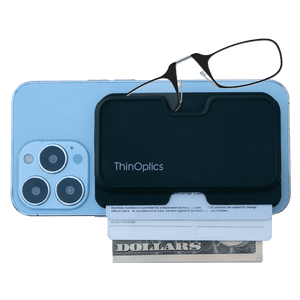
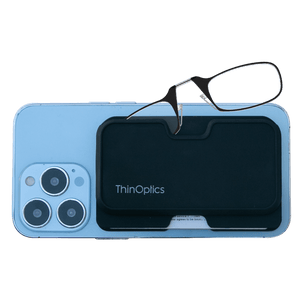
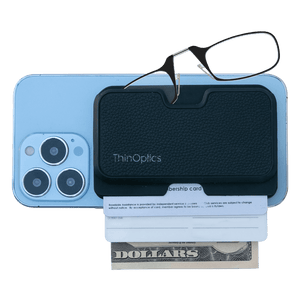
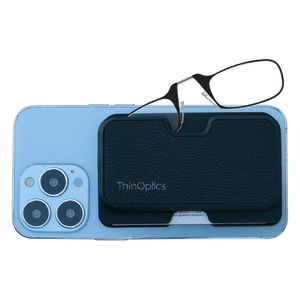
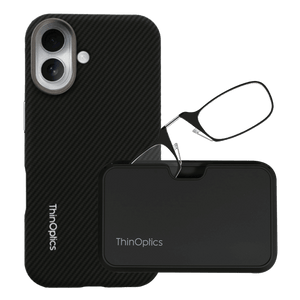
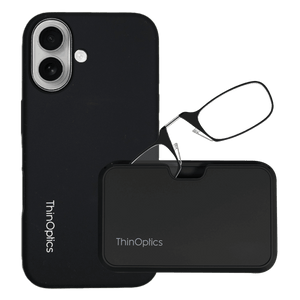
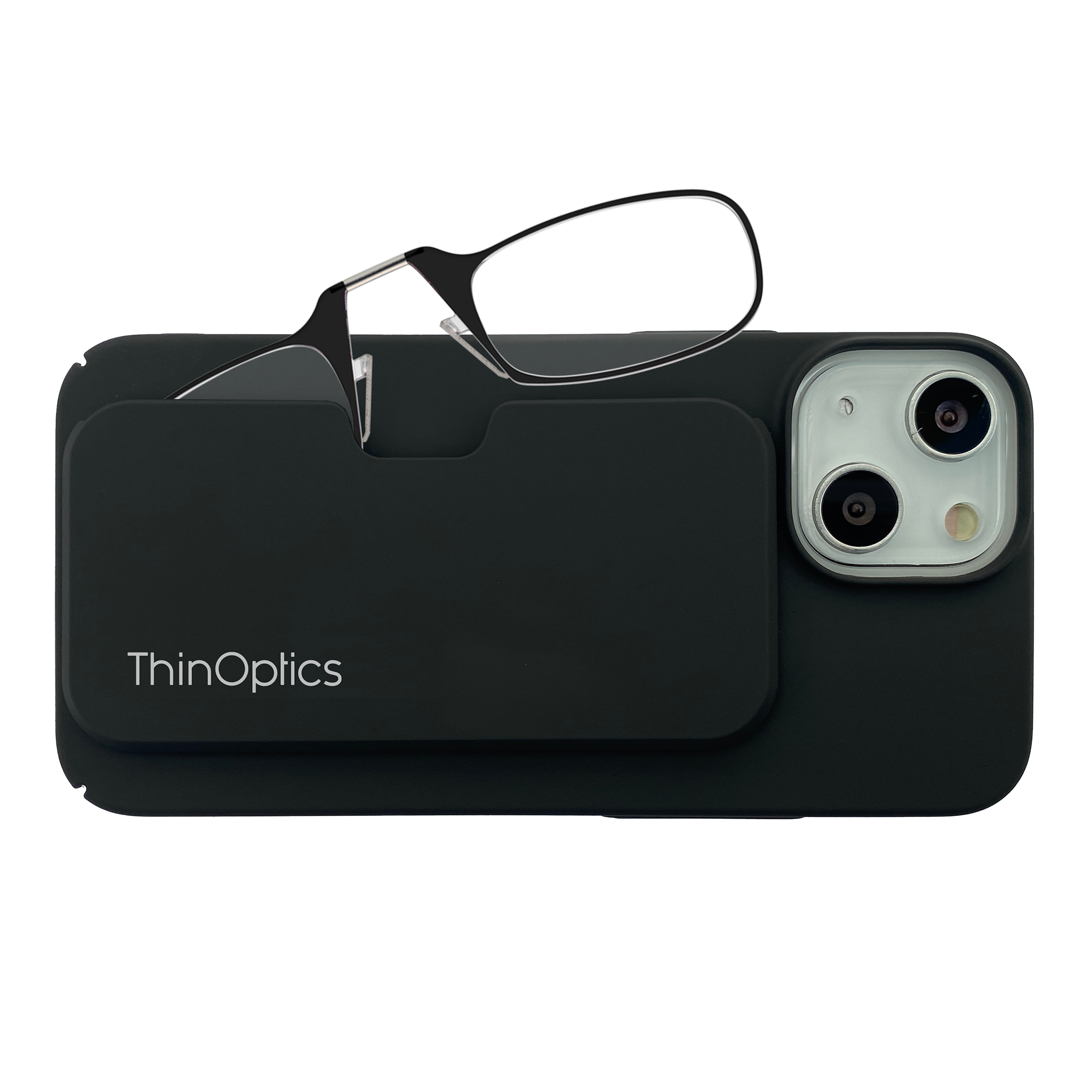
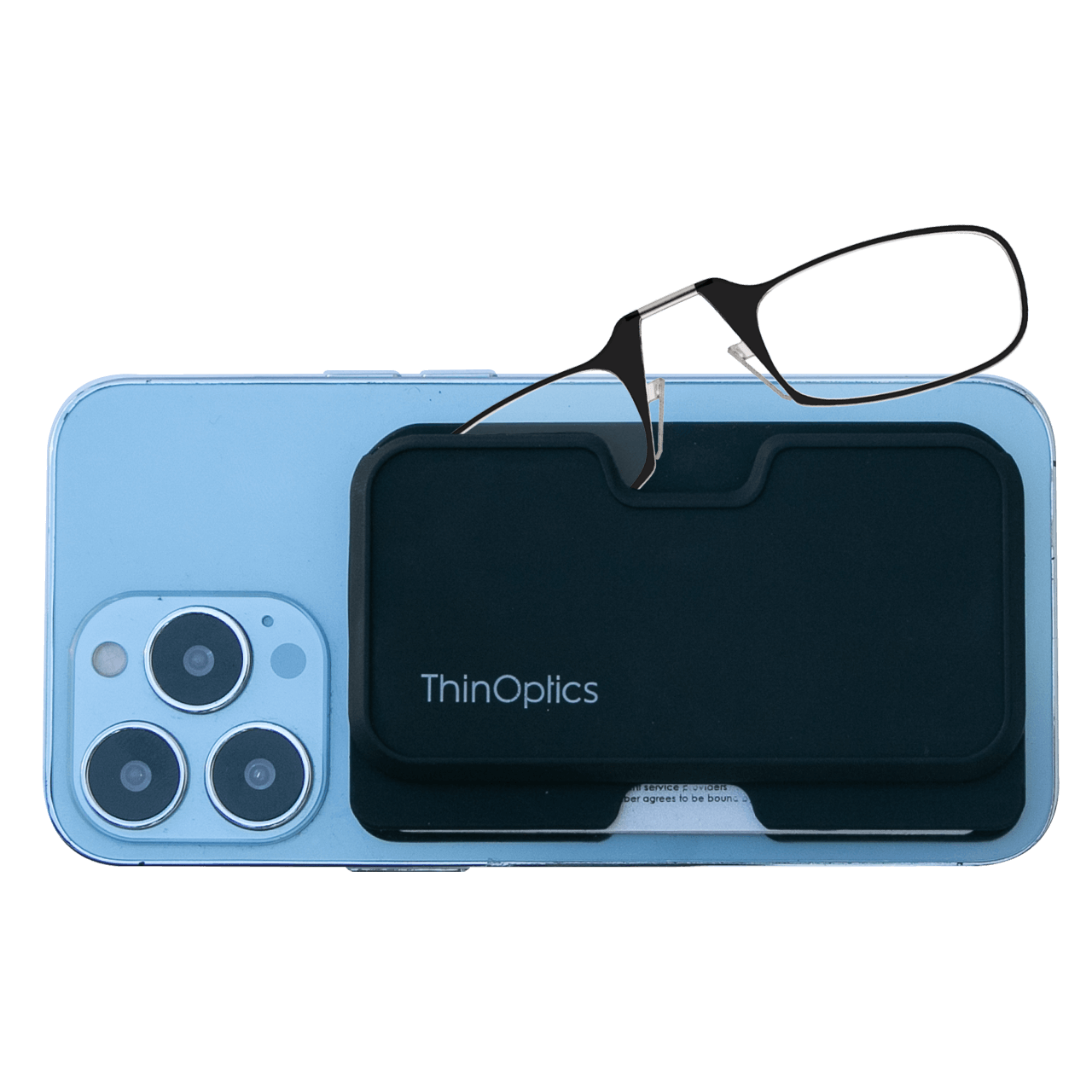
ThinOptics portable readers fit this use case well because they keep quick clarity close without adding bulk.
Backup Pairs
A single pair of readers is easy to leave on a desk, in a car, or beside the bed. Keeping slim backup pairs in the places you already reach for helps prevent the daily hunt.
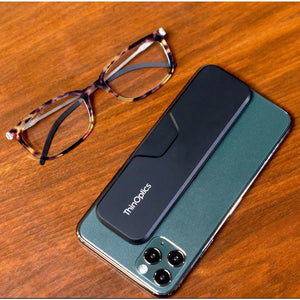
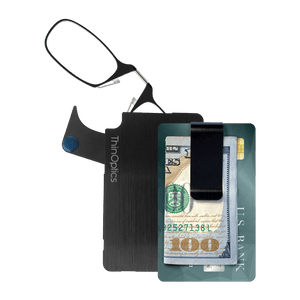
Phone, keychain, and wallet-slim carry options make readers easier to keep with you.

Straightforward Strength Needs
OTC readers work best when both eyes feel comfortable with the same magnification. If you are unsure, an eye exam gives the most reliable answer.
At-home strength checks can help you start, but they should not replace professional guidance if your vision feels uneven, strained, or inconsistent.
What Nobody Tells You About OTC Readers
Off-the-shelf readers are convenient, but they are built for average needs. That is why they can feel fine for a menu and frustrating after an hour at your laptop. The issue is not always strength. Sometimes it is fit, alignment, or correction.
Both Lenses Usually Have the Same Power
Many people do not need the exact same strength in both eyes. OTC readers usually use one matching power across both lenses. For quick tasks, that may be enough. For longer reading, one eye may start doing more work than the other.
They Usually Do Not Correct Astigmatism
If letters look shadowed, smeared, or slightly doubled, more magnification may not fix the problem. Astigmatism needs a more specific correction. That is where prescription reading glasses can help because they are based on your exam results.
Optical Center May Not Match Your Pupils
Your pupils need to line up with the clearest part of the lens. OTC readers use a fixed optical center, so the fit may not match your eyes. If you are ordering affordable prescription glasses online, having your pupillary distance measured helps ensure the lenses fit more accurately.
If you are ordering affordable prescription glasses online, having your pupillary distance measured helps ensure the lenses fit more accurately.
When Prescription Reading Glasses Are Worth It

Choose prescription reading glasses when readers make text bigger but not comfortable. They are worth it if your eyes need different powers, you have astigmatism, you read for long stretches, or OTC readers cause headaches, nausea, or blur.
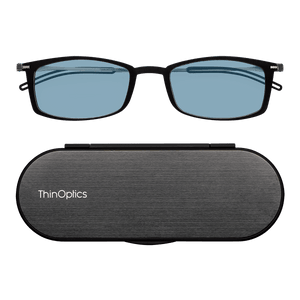
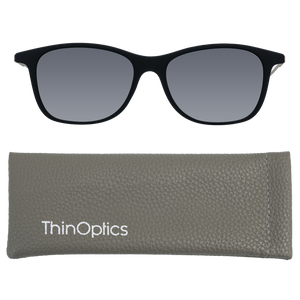
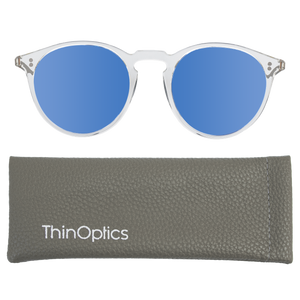
They also make sense for desk work, computer distance, progressives, bifocals, or custom lens needs. ThinOptics prescription eyeglasses support options like progressive, blue-light, polarized, and light-adjusting lenses for people who need more than basic magnification.
Affordable Prescription Glasses Do Not Mean Guesswork
Affordable prescription glasses should still feel accurate, comfortable, and made for your day. Start with a valid prescription, the right lens type, accurate PD or fitting measurements, a frame that fits, and lens options that match how you read, work, and move.
In the U.S., you are entitled to receive your eyeglass prescription after an exam, which lets you compare options with more confidence. ThinOptics prescription eyewear is worth considering when you want customized correction without paying for features you do not need.
Prescription Readers Vs. Off-the-Shelf Readers By Use Case
The right choice depends on the task. Here is a practical breakdown:
- Reading a Menu: OTC readers are often enough.
- Books for Long Periods: Prescription may be better if discomfort appears.
- Computer Work: Prescription or computer-specific readers are worth considering.
- Phone and Texts: Portable readers often fit well.
- Hobbies and Crafts: Prescription can help when precision matters.
- Driving Plus Dashboard Reading: Professional guidance is needed.
- Astigmatism or Different Eye Powers: Prescription is likely the better option.
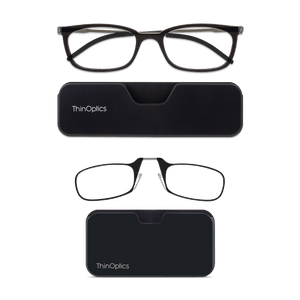
ThinOptics portable readers fit quick-use scenarios. ThinOptics prescription eyeglasses fit customized correction needs.
How to Choose the Right Option Without Overbuying
Use this quick filter before you buy:
- Start with an eye exam if symptoms are new, persistent, or unclear
- Match the glasses to the task: phone, book, computer, hobby, or all-day use
- Check whether both eyes need the same power
- Consider astigmatism, distance correction, or screen distance
- Choose OTC readers for occasional, simple magnification
- Choose prescription reading glasses for accuracy, longer wear, or complex correction
- Choose portable readers if your biggest issue is not strength, but access
ThinOptics offers a strength guide as a starting point, plus portable readers, custom readers, and prescription eyewear for different parts of your routine.
FAQs
Are prescription reading glasses better than off-the-shelf readers?
They are better when your eyes need custom correction, but OTC readers can work well for quick, simple close-up tasks.
Can OTC readers damage your eyes?
They usually will not damage your eyes, but the wrong strength or fit can cause headaches, blur, or eye strain.
When should I switch to prescription reading glasses?
Switch when readers feel uncomfortable, your eyes need different powers, you have astigmatism, or you wear them for long stretches.
Are affordable prescription glasses worth it?
Yes, when they use your correct prescription, PD, lens type, and frame fit.
Do I need an eye exam before buying readers?
An exam is the safest way to confirm your strength and catch other causes of near-vision changes.
Keep Clarity Close With the Right Pair for the Job

OTC readers can be perfect for quick close-up moments. Prescription reading glasses are better when your eyes need custom correction. The right choice is not the most expensive pair. It is the pair that fits your routine.
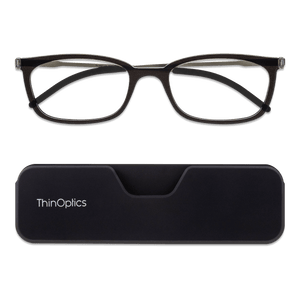
For everyday access, ThinOptics portable readers and slim cases keep clarity close without bulk. For more specific vision needs, ThinOptics prescription eyeglasses offer a customized option built around your prescription.
Explore ThinOptics readers and cases to keep clarity close wherever your day takes you.